
Direct Answer: Planning a 10-day Egypt trip from India? Keep roughly ₹1.7–2 lakh per person aside if you’re joining a group trip that covers hotels, a Nile cruise, transfers and most activities. That includes a trip package costing around ₹1.2–1.3 lakh, plus flights (₹35k–45k), a visa (around ₹7,500) and monument entry fees (around ₹9,000). Yep, the pyramids have a budget of their own. Here’s the full breakdown so your dream trip doesn’t turn into a financial plot twist.
- That tempting “starting at” price? It often skips flights, visas and monument entry fees. Keep an extra ₹50k–60k in your budget for these costs.
- Egypt’s e-visa process for Indians happens online and reportedly takes around 5–7 working days. Apply early, not during your pre-flight panic spiral.
- Entry fees at major sites like Abu Simbel, Karnak and the Valley of the Kings are often paid separately and can add up to around $90–100 USD across a cruise itinerary.
- A DIY Egypt trip is possible, but you’ll be coordinating domestic transport, hotels and English-speaking guides yourself. You might save money, but you’ll also inherit the logistics department.
- Indian-booked packages may include 5% TCS and 2% GST on top of the trip price. TCS may be claimable against your income tax return, while GST generally isn’t refundable. Check the applicable charges before booking.
The “Starting At” Trap

You’ve seen the travel ads. A gorgeous pyramid, a dreamy Nile cruise and a price that makes you think, Wait, Egypt for that little? Say less.
Then you reach the checkout. Flights? Extra. Visa? Extra. Entry fees for the monuments you literally came to see? Also extra.
Suddenly, you’re doing mental arithmetic in the group chat while three friends insist the original price was supposed to cover everything. Fun times.
So let’s skip the financial jump scare. This breakdown uses a typical 10-day Cairo–Nile–Hurghada itinerary, similar to the route many group trips and tour operators follow. You’ll see what usually comes with the package, what you’ll pay separately and where you can save without making the trip unnecessarily uncomfortable.
No vague promises. Just the numbers you need before you book.
What’s Actually in a 10-Day Egypt Trip
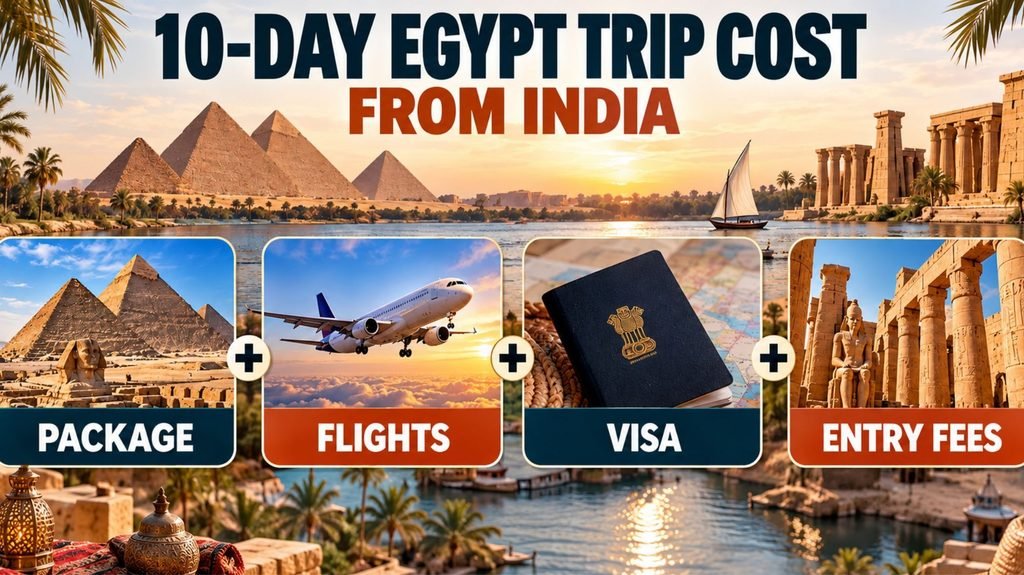
Your typical 10-day Egypt adventure covers three big experiences: Cairo’s pyramids and ancient sites, a multi-night Nile cruise between Aswan and Luxor, and some downtime on the Red Sea coast in Hurghada.
Think Giza and Sakkara, temples like Philae and Karnak, the Abu Simbel excursion, and a few days by the sea. Basically, ancient-history overload followed by beach mode.
But here’s the catch: not everything you see in the itinerary is automatically included in the package price.
| Cost category | Usually included in trip price | Usually paid separately |
| Hotels in Cairo and Hurghada | ✅ | — |
| Nile cruise cabin | ✅ | — |
| Most breakfasts and several lunches/dinners | ✅ | — |
| Inter-city transfers, including train, bus and cruise transfers | ✅ | — |
| Core sightseeing, including Giza, Sakkara, Philae, Luxor and Abu Simbel | ✅ | — |
| International flights | — | ✅ |
| Egypt e-visa | — | ✅ |
| Monument and site entry fees during the cruise | — | ✅ |
| Hot air balloon ride in Luxor | — | ✅ Optional |
| Meals not specified in the itinerary | — | ✅ |
| Airport drop-off at the end of the trip | — | ✅ Depends on flight timing |
Your booking rule: Never assume an activity, meal or transfer is included just because it appears in the itinerary. Check the inclusions and exclusions before paying. Your future self will appreciate it.
The Trip Price Itself
For a 10-day group trip like this, expect the main package to cost around ₹1.2–1.3 lakh per person.
That typically gets you 3–4 star hotels for the land portion, a 5-star Nile cruise for the river leg, group travel with around 12–15 people, transfers between cities, most meals and the main sightseeing experiences.
Some trips also offer early-bird pricing. If your dates are flexible and you’ve already decided to go, booking before the offer deadline could save you a few thousand rupees. Not bad for doing the same trip with a little less damage to your wallet.
But, and this is a fairly important but, that package price isn’t necessarily your final bill.
Flights, visa fees and monument entry charges can sit outside the headline amount. Add those, and the total starts looking very different.
Let’s get into the extras people tend to forget.
Visa: What It Actually Costs and How Long It Takes

Before you start mentally posing in front of the pyramids, sort out your visa.
For planning purposes, budget around ₹7,500 for the Egypt visa. The stated processing window is approximately 5–7 working days, but applying at least 2–3 weeks before departure gives you some breathing room if anything needs attention.
You can check the official Egypt e-visa portal rather than immediately paying a third-party agency to handle the application. Why pay an additional service fee without first checking whether you need that help?
There’s one important detail, though. The application process and eligibility requirements for Indian nationals may involve an accredited Egyptian travel agent or sponsorship. Don’t assume every passport holder can complete the process independently just because an online portal exists.
Check the current requirements directly before applying. Visa rules and procedures can change, and an old travel blog isn’t going to fix a last-minute application problem.
Your move: Check the official requirements, confirm the applicable fee and apply early. Visa admin is boring. Missing your trip because you left it too late is considerably worse.
Entry Fees: The Line Nobody Mentions
You’ve reached Egypt. You’ve booked the trip. You’re ready for temples, tombs and a truly unreasonable number of photographs.
And then come the monument entry fees.
On a Nile cruise itinerary, entrance charges for sites such as Abu Simbel, Kom Ombo and Philae may be paid directly at the sites rather than included in the main package. Across a full cruise itinerary, budget roughly $90–100 USD, or around ₹9,000, for these additional fees.
The exact amount depends on the sites included in your itinerary and the applicable ticket prices.
This isn’t necessarily a sneaky extra from your tour operator. Monument tickets can be separate from the services covered by your package, so the cost needs its own place in your budget.
Budget tip: Ask your operator for a list of included sightseeing tickets and separately payable entrance fees. “Sightseeing included” can mean different things depending on the package. Get the details before you book, not when you’re standing at the ticket counter.
DIY Versus Group Trip: An Honest Comparison
Can you plan the same 10 days yourself for less? Absolutely possible. Is DIY automatically cheaper? Not necessarily.
Your final cost depends on your hotel choices, cruise booking, travel dates, transport and whether you’re travelling solo or sharing costs with someone else.
Here’s how the two options compare.
| DIY | Group trip | |
| Flights | You’re booking the same flights and paying the applicable fare | Same |
| Visa | You manage the application yourself; the fee is still yours | The process may be handled for you, but confirm the fee |
| Hotels and cruise | You may find cheaper hotels off-season, but a 5-star Nile cruise booked solo can cost more per person | Group rates may work out better, especially for the cruise |
| Inter-city transport | You arrange domestic flights, trains or private transfers | Routes and transfers are usually arranged in advance |
| Guides at sites | You arrange and pay for guides separately if required | Guides for core sightseeing are usually included |
| Flexibility | You control the pace, detours and downtime | The itinerary is more fixed, but the logistics are handled |
| Solo traveller cost | Single supplements can increase your accommodation and cruise costs | Twin-sharing with another solo traveller may help you avoid a single supplement |
So, what’s the actual verdict?
Flights and visa fees don’t magically become cheaper just because you’re travelling independently. The potential savings come from other parts of the trip.
A group trip can offer better value for a Nile cruise and help solo travellers avoid paying the full cost of a room alone. It also saves you from organising every transfer, hotel and guide.
DIY can work well if you prefer simpler accommodation, want complete control over your schedule and enjoy planning the details yourself.
But if your dream holiday doesn’t involve comparing train schedules at midnight or figuring out your next transfer while dragging a suitcase, paying for an organised itinerary may be worth it.
Where to Save, Where Not To
You don’t need to spend money on every possible extra to have a great Egypt trip. Some costs are flexible. Others deserve a little more respect.
Safe to adjust
- Meals outside the included ones: Try local street food and casual restaurants instead of defaulting to hotel dining for every meal. You can experience more of the local food scene without spending as much.
- The Luxor hot air balloon ride: Yes, the views look incredible. But the ride is optional, so skip it if it doesn’t fit your budget. The rest of Egypt isn’t suddenly less impressive.
- Souvenir shopping: Set a budget before you start browsing. Otherwise, that one little souvenir can become an entire collection of things you now have to squeeze into your luggage.
Don’t cut corners on
- Travel insurance: Your itinerary may involve desert heat, boat transfers and activities such as scuba diving in the Red Sea. Check that your policy covers your planned activities and any relevant medical or travel risks.
- The visa process: Don’t risk delays by relying on unofficial channels just to save a small amount. Use the official portal to check the current process and requirements.
- Inter-city transport: Egypt’s major destinations aren’t all next door to each other. Reliable transport matters when your itinerary includes multiple cities, excursions and cruise connections. A cheaper option isn’t a bargain if it leaves you missing the next part of your trip.
The idea isn’t to spend as little as possible. It’s to spend where it counts and avoid paying for things you don’t need.
Taxes You’ll See on the Invoice
Booking an international group trip from India? Don’t forget to check the tax section of your invoice.
The figures used in this breakdown are 5% TCS (Tax Collected at Source) and 5% GST on top of the trip price. The applicable rates and treatment can depend on the booking arrangement, package value and current rules, so confirm the exact calculation with your operator.
Here’s the basic difference:
- TCS: This may be adjusted or claimed as a credit against your income tax liability, subject to the applicable rules.
- GST: This is a tax on the service and generally isn’t refundable to an individual traveller simply because the trip is over.
Before you book, ask for an itemised price showing the base package, taxes and any additional charges. Two trips advertised at the same price can have different final totals.
Your budget should be based on the amount you’ll actually pay—not the prettiest number on the booking page.
Who This Trip Actually Suits
A 10-day Egypt group trip makes sense if you want the big experiences—pyramids, ancient temples, a Nile cruise and the Red Sea, without spending weeks building the itinerary yourself.
It’s also worth considering if you’re travelling solo. Sharing accommodation and joining a group can make the costs more manageable than booking every part of the trip independently.
And if your preferred holiday plan is to show up, explore incredible historical sites and let someone else coordinate the transfers, a group trip takes a lot of admin off your plate.
But it might not be your ideal fit if you want to spend several days exploring one particular region at your own pace. The same goes if you’re travelling with a large family group and would rather build a private itinerary around everyone’s preferences.
And if planning routes, comparing hotels and finding local guides is genuinely your idea of fun, DIY travel gives you more freedom to customize everything.
Neither option is automatically better. The right choice depends on your budget, travel style and how much planning you want to take on.
Conclusion
So, how much should you actually budget for a 10-day Egypt trip from India?
Think ₹1.7–2 lakh per person once you add flights, visa fees and monument entry charges to a package costing around ₹1.2–1.3 lakh. That’s a more useful starting point than the ₹1.2 lakh headline price you might spot on a package page.
And no, this doesn’t mean you need to abandon your Egypt plans. It just means you should know what you’re signing up for before you start booking flights and sending pyramid emojis to the group chat.
Build your budget around the complete trip, keep some room for meals and optional activities, and check exactly what’s included. Then you can focus on the good stuff: the pyramids, the Nile, the temples and those very well-earned Red Sea views.
Curious about what a real 10-day itinerary looks like? Check out The Egyptian Escape for the full day-by-day breakdown, or explore upcoming adventures on the Trip Calendar.
Frequently Asked Questions
Budget around ₹1.7–2 lakh per person, including a trip package costing approximately ₹1.2–1.3 lakh, flights (₹35k–45k), visa fees (around ₹7,500) and monument entry fees (around ₹9,000). Optional activities, shopping and other personal expenses come on top.
Usually, the visa fee isn’t included in the main package price, although some group operators may help you with the application process. Confirm whether visa assistance is included and how much you’ll need to pay separately.
Nope, don’t assume you’ll be eating on the package’s tab for all 10 days. Most trips include daily breakfasts and selected lunches or dinners, leaving some meals for you to arrange. The original estimate for these gaps is around ₹10,000–12,000 across 10 days, depending on your choices and the package inclusions.
If you’re travelling solo or in a small group and want a Nile cruise without taking on every booking yourself, a group trip can offer good value. Group rates may help with cruise costs, and sharing accommodation can reduce the per-person expense. DIY may suit you better if you want complete flexibility and don’t mind managing the logistics.
Aim to start at least 2–3 weeks before departure. The stated processing window is around 5–7 working days, but extra time gives you a buffer if your application needs further attention. Check the current eligibility and application requirements before submitting it.